Window Seat, No Plot: How All-Day Train Footage Became 2026’s Killer Background Show
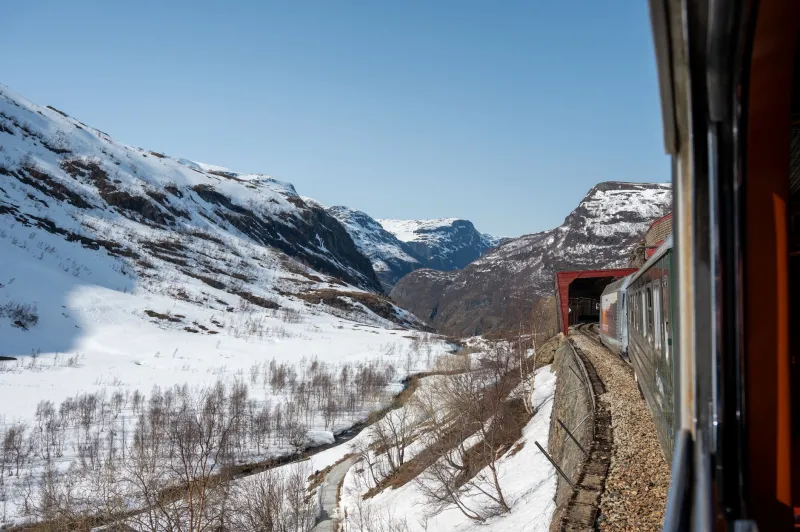
Here is a confession for 2026: the most reliable show in my house does not have a plot. It has a window. For ten hours, a train rolls through Norway, or a fireplace crackles, or a camera sits in an aquarium and lets fish be fish. No cliffhanger. No recap. No one asks me to remember a character's name. And yet it is the thing I leave on while I answer email, fold laundry, and pretend I am not watching television.
Slow TV is not new. Norway's NRK broadcast a seven-hour train ride in 2009 and turned it into a national event. But 2026 is the year the format stopped being a novelty and became a default setting. Streamers and free ad-supported channels have figured out that boredom sells, especially when it is beautiful and costs less than a prestige drama. Viewers, meanwhile, have figured out that predictability is not the opposite of entertainment. Sometimes it is the whole point.
The anti-plot twist
Prestige TV asks a lot. It wants your full attention, your memory, and your tolerance for a finale that might ruin the last three seasons. Slow TV asks almost nothing. That is why it works as background entertainment. It is not a second screen to a phone; it is a second screen to your life. You can look up and see a fjord. You can look down and answer a text. The train keeps going either way.
There is also a strange comfort in knowing exactly what happens next. A train enters a tunnel. A fire burns. A dog naps. In a year when the news cycle feels like a group chat with no mute button, a ten-hour train ride is a small act of control. You are not waiting for a twist. You are waiting for the landscape to change.
Why a 10-hour train ride works
The length is the feature. A five-minute scenic video is a snack. A ten-hour cab ride is a room. It gives your brain just enough motion to feel occupied without demanding a response. The sound design is accidental and perfect: rails, wind, the occasional announcement in a language you do not speak. It is ambient music with a view.
It also solves a very 2026 problem. We have more shows than ever and less patience for starting them. Slow TV is the rare thing you can begin without deciding anything. There is no episode order, no spoiler risk, and no pressure to finish. You can leave it on for 20 minutes or fall asleep halfway through and lose nothing.
The boredom economy is now a business model
Free ad-supported TV channels and YouTube have turned slow TV into inventory. A loop of a fireplace or a train window can run for hours, hold a viewer, and sell ads against what is basically a screensaver. For streamers, that is a dream: cheap content, long watch times, low production risk. For viewers, it is a trade. You get calm; they get a few ads. The genre has moved from public-broadcast experiment to background business.
That is why you are seeing more ambient channels in the same places you find old sitcoms and true-crime marathons. The boredom economy does not need your full attention. It needs your presence. And apparently, a lot of us are happy to give it.
Starter loops for work, wind-down, and dinner parties
Not all slow TV is created equal. Some of it is soothing. Some of it is a host yelling welcome back every eight minutes. Here is a rough guide.
- Work: a train window with no narration. Bergen Line, an Amtrak corridor, anything with rails and no commentary. Keep the volume low enough for calls.
- Wind-down: fireplace, aquarium, rain on a cabin window. These are the ones that move slowly enough to let your brain stop editing the day.
- Dinner parties: an alpine train at dusk or a crackling fire on mute. No dialogue, no sudden sirens, no one asking the table to look at a plot twist.
- Avoid: looped videos with jump cuts, loud intros, or a host who keeps explaining the scenery. The whole point is that nobody is selling you the moment.
The catch: slow TV is not actually nothing
The genre only works if you stop expecting it to be a story. If you sit down and wait for a plot, you will be bored in four minutes. The trick is to let it be furniture with a pulse. Put it on, do the thing you were going to do, and let your eyes take a vacation when they need one.
That may be the real 2026 TV takeaway. We still love a good twist. But after a long day, a train with no destination and no dialogue can feel like the most generous show on the menu. It does not ask us to keep up. It just keeps going, and lets us catch our breath.