Same Room, Different Lives: The Quiet Rise of the No-Performance Hangout
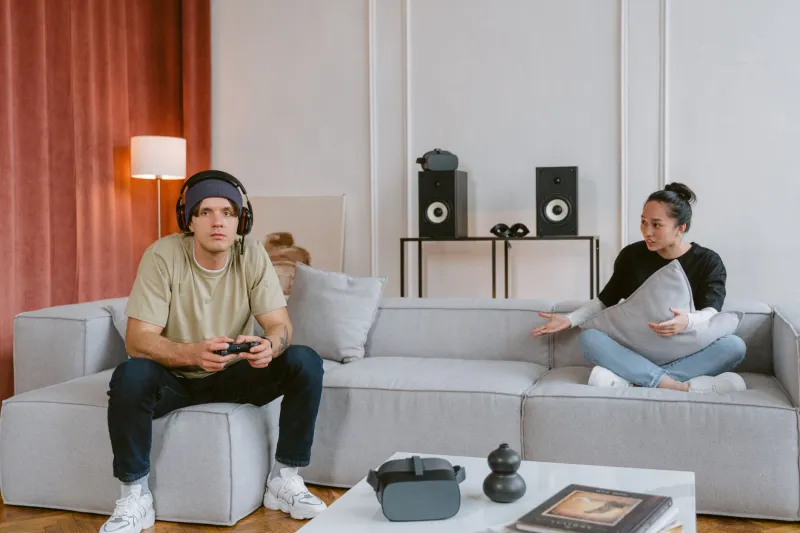
Picture a Friday night that does not ask you to be interesting. There is a friend on the couch answering emails. Another is knitting something lumpy. Someone else is scrolling TikTok with the volume low. Nobody is performing. Nobody is trapped in a forced conversation about someone's cousin's wedding. It is a hangout, but it is also not quite a hangout in the traditional sense. Welcome to the no-performance hangout, the social format that borrows a page from childhood and asks a simple question: what if we just existed in the same room?
The setup has a name. Therapists and child-development researchers call it parallel play, the stage when toddlers sit near each other, doing separate activities, without demanding that anyone share. For decades, it was treated as a developmental milestone you outgrow. In 2026, adults are quietly reclaiming it. They are gathering in living rooms, rented studios, and corner booths to do completely different things, together. And the people who study loneliness and social health are not laughing.
The Anti-Social Social Club
The appeal is easy to understand if you have ever left a party more drained than when you arrived. Traditional socializing comes with a performance tax. You need to ask questions. You need to react. You need to remember names and pretend you are not checking the time. Parallel play strips most of that away. The invitation is not come over and entertain me. It is come over and do your own thing near me.
That might sound like a recipe for awkward silence. In practice, it tends to produce something softer. People bring laptops, sketchbooks, laundry to fold, or nothing at all. Some talk. Some do not. The room has a pulse, but it is not demanding that you match it. For adults who are tired of small talk but still crave company, that is a rare combination.
The trend has been building in quiet corners of the internet and in real life. A Brooklyn woman hosts a Sunday afternoon session where guests rotate between reading, mending clothes, and making grocery lists. A group in Austin meets monthly at a coffee shop with a strict no-networking rule. In Minneapolis, a book club has quietly morphed into a bring-your-own-project club, with the actual reading optional. None of these gatherings are trying to be a scene. That is precisely the point.
Why Therapists Are Nodding Along
Mental health professionals have been warning about a loneliness epidemic for years, but the solutions often sound like homework. Join a club. Volunteer. Put yourself out there. Parallel play offers a lower bar. It acknowledges that connection does not always require deep disclosure or even a shared activity. Sometimes it just needs proximity, repetition, and a lack of pressure.
There is a term for part of what happens in these rooms: co-regulation. It is the idea that humans calm down and feel safer when they are near other calm humans. You do not have to talk about your anxiety to feel less anxious. You just have to sit near someone who is quietly folding a towel. That is not a replacement for therapy or close friendship, but it can be a gentle supplement. For people who are burnt out on social obligations or recovering from a season of isolation, it can also be a bridge back.
Therapists also like that parallel play removes the pressure to be good at hanging out. You do not have to be witty. You do not have to have a story ready. You do not have to pretend your week was interesting. You can show up with a half-finished spreadsheet and a bag of chips and still count as present. That is a version of socializing that many adults can actually sustain.
How to Host Your Own Anti-Social Social Club
You do not need a manifesto or a rented loft. You need a room, a loose plan, and a clear invitation that sets expectations. The invitation is the hardest part, because it has to signal that this is not a party without making it sound like a punishment. Try something like: Bring whatever you are already behind on. We will sit in the same room and ignore each other politely. Snacks provided.
Set a few ground rules, but keep them light. Phones are allowed. Headphones are fine. Talking is optional. No one has to explain why they are there. It also helps to designate zones. A quiet corner for reading or working. A table for crafts or folding laundry. A kitchen where people can drift in and out. The physical layout does half the social work by making it easy to be alone together.
Time limits matter, too. Two hours is plenty. Parallel play works best when it is easy to leave. A hard stop gives everyone permission to bail without a speech. And resist the urge to turn it into a recurring obligation. The format thrives on low stakes. The moment it starts feeling like a standing commitment with attendance pressure, it becomes just another thing on the calendar.
The Rules of the Room
The unofficial code of the no-performance hangout is simple. Do not narrate your screen. Do not ask what someone is working on unless they look up. Do not treat silence as a problem to be solved. If you want to talk, talk. If you want to zone out, zone out. The only real rule is that no one gets recruited into a conversation they did not sign up for.
That does not mean the room is cold. It means the room is honest. People often end up talking anyway, but it happens in small bursts, the way it does in real life. Someone asks for a charger. Someone laughs at a text. Someone offers to share a snack. The conversation is incidental, not mandatory. That is what makes it feel like a break instead of an assignment.
Why It Works Now
Going out has gotten expensive and elaborate. Even a casual dinner can feel like a production. Parallel play is the opposite of a production. It is a pair of sweatpants in social form. It also fits the way many people already live: half in person, half on a device, always doing three things at once. Instead of fighting that reality, it makes room for it.
There is a cultural shift here, too. Adults are getting more comfortable with the idea that friendship does not have to look like a sitcom. It can be quiet. It can be intermittent. It can look like two people in the same apartment, doing separate things, occasionally looking up to confirm the other person is still there. That is not a failure of intimacy. It is a different version of it.
So the next time you want to see a friend but do not have the energy for conversation, try the no-performance hangout. Bring your laptop. Bring your knitting. Bring nothing at all. Sit in the same room. Let the silence be a feature, not a bug. You might find that doing nothing together is exactly the kind of something your week was missing.